“Ella McCay” and The Right to Like “Bad” Movies
James L. Brooks’s imperfect, sincere film, and the problem with letting consensus decide what art is allowed to mean to us
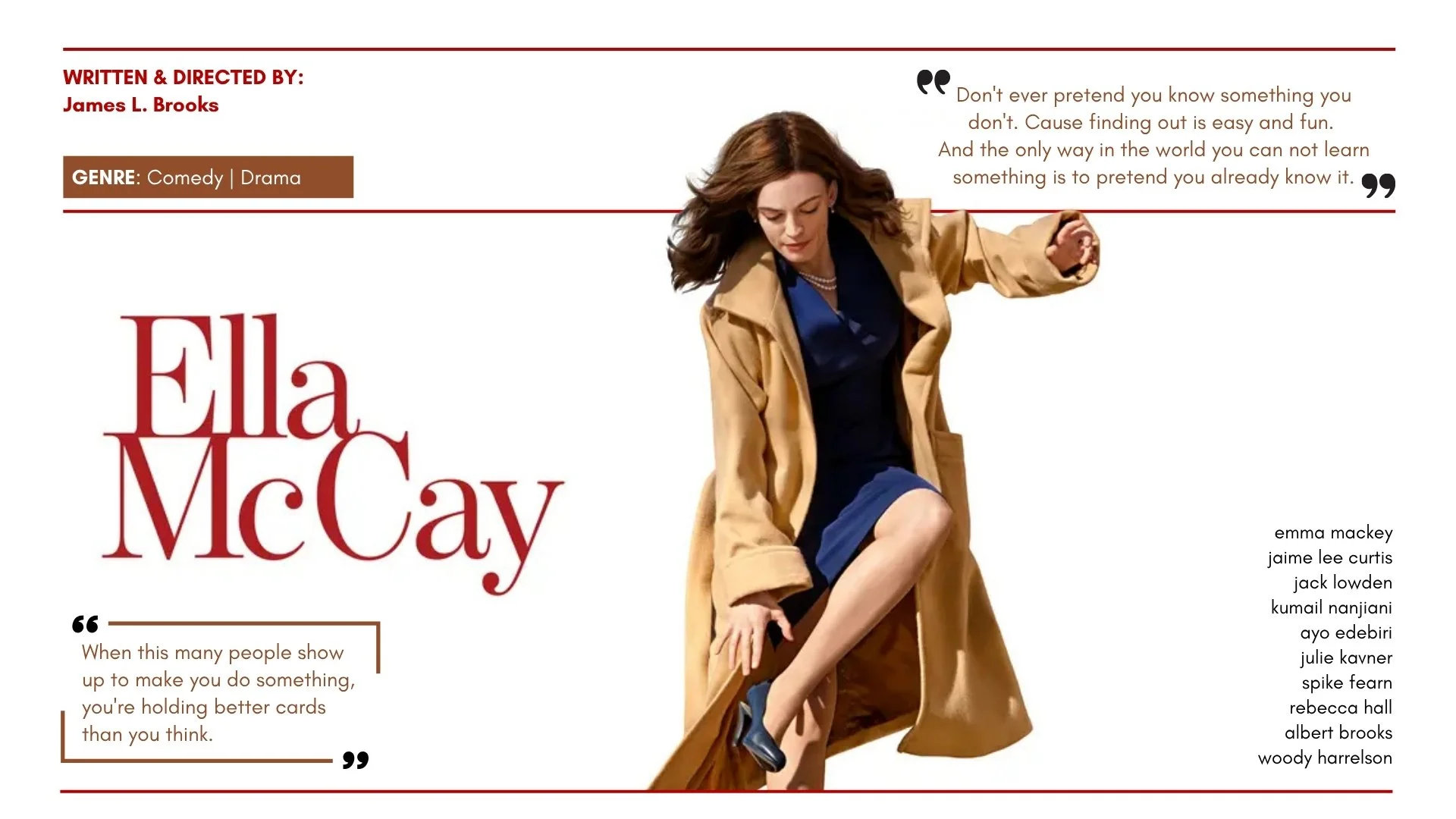
I saw Ella McCay twice.
The first time was in mid-December. I enjoyed it, came home, and immediately did the thing you’re not supposed to do: I looked up the reviews before my own thoughts had settled. They were mostly bad.
Suddenly, instead of thinking about the film, I started thinking about my taste. How could I have enjoyed something that had been received so poorly? What had I missed? Was I being too generous? Did I not know how to recognize a good movie anymore?
So I went to see it again.
And I liked it even more the second time.
But the repeat viewing clarified something — and not necessarily something about Ella McCay. It made me notice how quickly I had let critical consensus interrupt my own experience. I had left the theater knowing how the film made me feel. A few reviews later, that knowledge suddenly seemed insufficient.
Why did it matter so much that the movie had not been “well received”?
I do not remember always watching movies this way. I have loved all kinds of films for my entire life: masterpieces, crowd-pleasers, experimental styles, obvious failures, and movies whose ambitions exceeded their execution but moved me anyway. I have never needed every film to be the greatest one I had ever seen.
Lately, though, online movie discourse seems increasingly organized around verdicts. A film is brilliant or terrible. A masterpiece or a disaster. Cinema or content. And if a work lands somewhere in the enormous territory between those poles, we reach for the verdict that now ends so many conversations: mid.
The word may be efficient, but it is not especially curious. It tells us where a movie has been placed in a hierarchy without telling us anything about the experience of watching it. What did the film attempt? Where did it succeed? Where did it lose its way? Which image, performance, or idea survived its flaws?
More importantly: what did it mean to you — the person who watched it?
The internet has made it easier than ever to consult the consensus before we have formed an opinion of our own. Ratings, reviews, reaction videos, and opening-weekend arguments are available instantly. What begins as curiosity can become a search for permission: Am I allowed to like this? Did the right people approve? Can I defend my response if challenged?
Taste stops being a relationship with art and becomes a test we are afraid to fail.
I go to the movies, first of all, to enjoy myself for a little while — because I’m choosing to trust that a group of creative people has put thought, labor, and feeling into telling a story worth my attention for a couple of hours. That trust matters to me, especially in a world where we’re constantly encouraged to watch things that aren’t worthy of our attention at all.
And I love films — not just great films. Films.
I love that human beings keep finding ways to tell stories to one another. I love walking, for a short while, beside characters who are nothing like me, or startlingly familiar, or both. I love what an actor can reveal in a pause, what a director can do with rhythm, what a story can understand even when it fails to understand something else.
This does not mean every movie is secretly good, nor that criticism is unkind.
But there has always been room for bad movies.
Some films fail on nearly every level. Others are careless, cynical, or simply dull. But even disappointment can be an experience rather than a final grade. A movie can be flawed and still contain a performance, an idea, or an emotional truth worth carrying away.
Ella McCay is not a perfect film. Apparently, I didn’t need it to be.
James L. Brooks
I went into Ella McCay with a lot of goodwill and high expectations for a James L. Brooks film—emotionally messy storylines, interlocking lives, and talky scenes that gradually reveal more depth than they first seem to contain—especially after a 15-year break. At 85, with a closet full of awards for films like As Good As It Gets”, “Terms of Endearment,” and “Broadcast News”—not to mention his TV work on “The Simpsons”—he has nothing left to prove, at least to me.
Ella McCay unfortunately falls relatively short. The movie has that rhythm, but in a more convoluted form than I would have preferred. My guess is that there’s a cleaner, more organized film somewhere beneath the version that made it to the screen. Certain storylines compete for space. The emotional movement can be difficult to follow. The whole thing could use more structural clarity.
But what it lacks in organization, it makes up for in charm and sincerity.
That matters. Sincerity has become strangely unfashionable in a culture that often treats irony as evidence of intelligence. Ella McCay, and its titular character, is willing to care openly about people trying to become better, help each other, and interrupt the damage passed down through families. It is funny, heartfelt, and hopeful without pretending that hope makes life neat.
The cast is the best part of the movie. They do a great deal of work to hold its moving parts together. Emma Mackey is especially brilliant, finding a coherent emotional life inside a film that sometimes surrounds her with chaos. Woody Harrelson remains a fucking treasure, even while playing a character I found personally triggering.
The performances make the film’s generosity believable. Even when the story becomes unwieldy, the actors keep returning us to the human beings inside it.
There are elements of a wonderful film in Ella McCay; just mismatched and badly stuck together
Ella is a hot mess: a delightful but maddening mix of virtues and failings. She’s the kind of person who wrote passionate political papers in high school—an old-school bleeding heart, naive enough to believe it’s the government’s job to help people who need it most.
One of the its most resonant ideas is how deceptively easy it is to repeat generational patterns—even when you know they exist.
The idea that self-awareness is not immunity.
Even though she grows up resenting her dad (Harrelson), who blows up the family when his serial philandering costs him his high-profile job, it’s disappointing but not shocking to learn that she still ends up with a husband who has the same traits as her father — albeit in a different font…what a jerk!
You can understand that you deserved better love, care, or stability than you received as a child and still choose someone who reproduces the same emotional conditions in a different font. You can name the wound and remain vulnerable to what feels familiar. You can promise yourself that your life will be different and discover, years later, that difference requires more than recognition.
I appreciated that Ella McCay does not treat insight as a cure. Its characters may understand themselves, but they still have to make choices against habits formed long before they had language for them.
That is a difficult and compassionate truth. Knowing better can be the beginning of change, but it is not the same as changing.
The film also understands how much difference one person can make inside a chaotic or harmful system—not by “fixing” you, but simply by seeing you clearly. This is exemplified in Ella’s relationship with her caustic Aunt Helen (Jaime Lee Curtis), under whose care she finished high school and who remains her best friend and confidante in the present day.
We often describe care through dramatic intervention: someone shows up, solves the problem, changes the life. But being truly seen can be quieter than that. It can mean taking someone seriously before they’ve proven themselves, making room for their complexity, or recognizing that what looks like a flaw may actually be a quality the surrounding system has no use for.
In an egocentric world, intelligence, curiosity, sensitivity, and a genuine desire to help can feel threatening. The qualities we claim to admire are not always the ones our institutions reward. People who want to seem thoughtful do not necessarily enjoy the presence of someone who actually thinks deeply. People who like the appearance of change may resent the person who asks them to practice it.
Sometimes one person’s confidence in you doesn’t solve the problem. It simply gives you enough room to remain yourself while you solve what you can.
That can make all the difference.
Another idea I took from the film is that helping people does not have to require martyrdom.
Many sensitive, conscientious people believe their care only counts if it costs them everything. They take responsibility for entire systems, absorb everyone’s needs, and eventually burn out under the impossible scale of what remains undone.
But sometimes the most sustainable way to help is to do the smallest useful thing you can do for as many people as possible.
This is not an argument for thinking small. It is an argument for thinking concretely. Grand intentions can be emotionally satisfying, but help becomes real at the level of action: one policy improved, one person believed, one door held open long enough for someone else to pass through.
The film’s hopefulness works because it is not only interested in sweeping transformation. It notices the cumulative effect of smaller acts of recognition and courage.
One line from the movie has stayed with me. It begins from the fear that an individual voice does not matter, then offers this reply: “When this many people show up to make you do or not do something, you’re holding better cards than you think.”
Resistance can be evidence of power. If people are investing significant effort in silencing, persuading, or containing you, perhaps your voice matters more than they would like you to believe.
A review should be more than a verdict
I wanted to write this partly to note what Ella McCay helped me remember: it’s always more interesting to ask why something worked for me, where it failed, and what stayed with me afterward than to flatten the whole experience into a single judgment.
The movie drops the ball in places — lots of places. Its structure is messy, and its good intentions sometimes outpace its ability to organize them. None of that erases its humor, performances, sincerity, or the ideas I was left with after the credits rolled.
That’s more worthwhile to acknowledge than simply calling a film “mid.”
Criticism should sharpen our experience of art, not replace it. Reviews can add context, challenge first impressions, and help us notice what we missed. But they can’t retroactively decide whether we were moved, delighted, irritated, or changed.
Consensus is useful information, but it shouldn’t be the authority over our inner lives.
The second time I watched Ella McCay, I wasn’t watching to learn whether the critics were wrong. I was watching to see whether I had been wrong about my own response.
I had not been.
Anyway, it’s available to stream now. I think you should see it — preferably with a friend.
You might love it. You might find it charming but frustrating. You might hate it.
But give yourself the chance to experience it before you inherit somebody else’s reaction. Let the movie succeed or fail in front of you. Notice what you feel before you check what everyone else has agreed to feel.
You have the right to dislike art on your own terms.
You also have the right to love something the consensus has dismissed.
♥️