Heartbreak & Starting Over in “Funny Story”
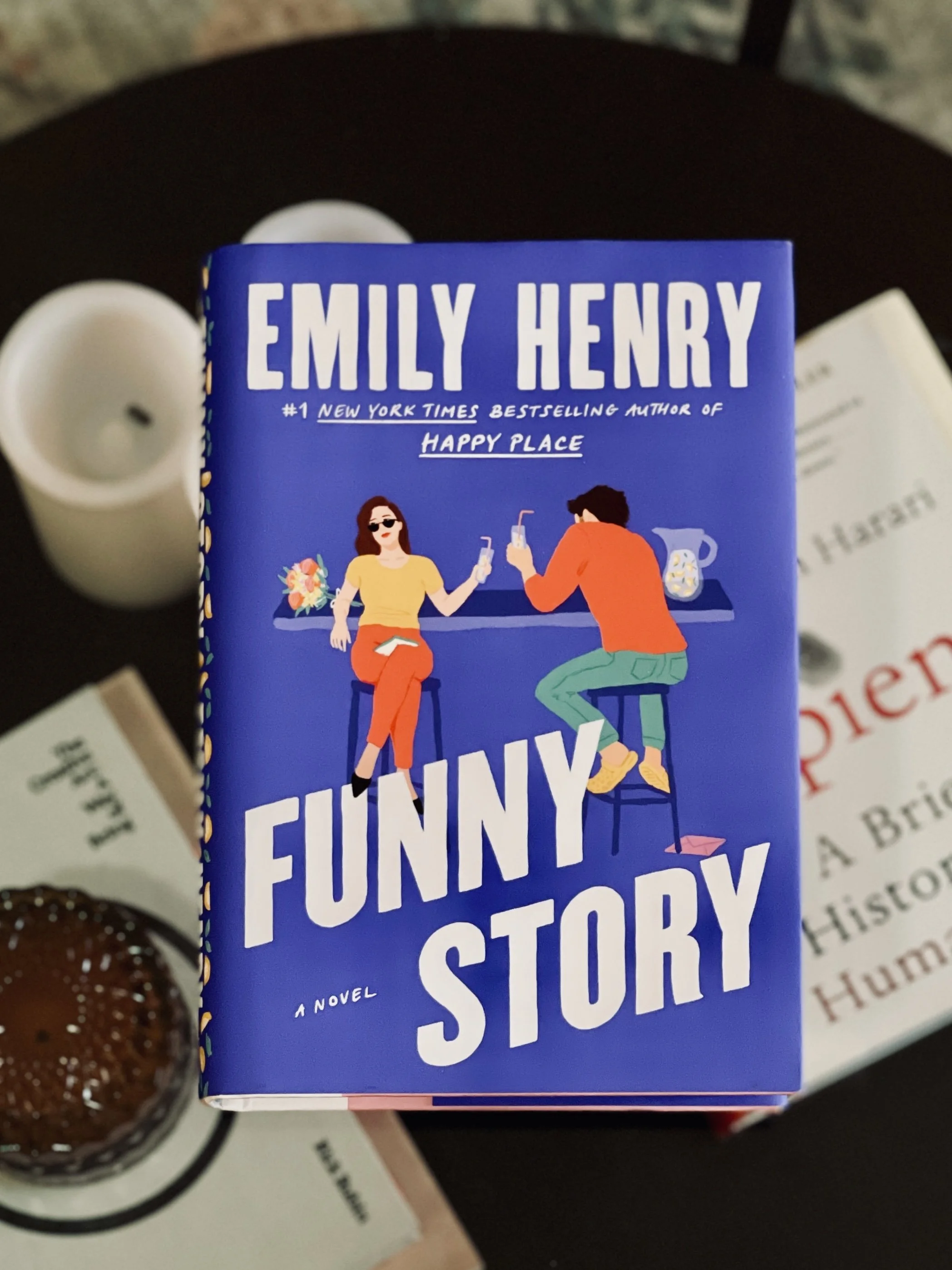
Author: Emily Henry |
Book: Funny Story
Daphne always loved the way her fiancé Peter told their story. How they met (on a blustery day), fell in love (over an errant hat), and moved back to his lakeside hometown to begin their life together. He really was good at telling it…right up until the moment he realized he was actually in love with his childhood best friend Petra.
Which is how Daphne begins her new story: Stranded in beautiful Waning Bay, Michigan, without friends or family but with a dream job as a children’s librarian (that barely pays the bills), and proposing to be roommates with the only person who could possibly understand her predicament: Petra’s ex, Miles Nowak.
Scruffy and chaotic—with a penchant for taking solace in the sounds of heart break love ballads —Miles is exactly the opposite of practical, buttoned up Daphne, whose coworkers know so little about her they have a running bet that she’s either FBI or in witness protection. The roommates mainly avoid one another, until one day, while drowning their sorrows, they form a tenuous friendship and a plan. If said plan also involves posting deliberately misleading photos of their summer adventures together, well, who could blame them?
But it’s all just for show, of course, because there’s no way Daphne would actually start her new chapter by falling in love with her ex-fiancé’s new fiancée’s ex…right?
I’ve said it before, and I’ll say it again: Emily Henry knows how to write a romance that stays with you. I expected to enjoy Funny Story, especially after loving Happy Place. I didn’t expect it to become one of my top two Emily Henry books—or for Miles to become my first official book boyfriend. Apparently, I make exceptions for emotionally intelligent men who communicate, cook, and help a woman rebuild her life without trying to take it over.
I adore Miles.
The novel opens with a perfectly engineered romantic comedy. Daphne’s fiancé, Peter, leaves her for his childhood best friend, Petra; Petra, in turn, leaves her boyfriend, Miles. Daphne and Miles—connected only by the two people who abandoned them—become roommates as they try to survive the wreckage. When Peter and Petra announce their engagement, Daphne and Miles respond with the wonderfully mature decision to pretend they’re dating.
We all cope differently, okay.
For Daphne, heartbreak means more than losing Peter. She moved to his hometown and built a life around their shared future, only to realize that her friendships, routines, and sense of belonging seemed to belong to him first. Henry understands that a breakup can take an entire imagined life with it: the home, the community, the person you thought you were becoming.
I think this is why this fake-dating plot works so well. The best versions of the trope are really friends-to-lovers stories in disguise, with the performance of intimacy giving two guarded people permission to grow close before either is ready to admit what that closeness means. Daphne and Miles don’t fall in love because pretending magically creates desire. They fall in love because the charade gives them time to see each other clearly—truly.
Over the course of this pretense, Miles introduces Daphne to the town beyond Peter—the people, the hidden corners, the small pleasures she never had reason to claim as her own. Daphne sees beneath Miles’s easygoing charm to the wounds he carries lightly. Their intimacy grows through shared routines, honest conversations, attention, and kindness. The sexy parts are, of course, also helpful.
What makes Miles such a compelling romantic lead is that he doesn’t rescue Daphne. He offers companionship while she begins rescuing herself. A lesser romance might simply transfer her dependence from one man to another; Funny Story lets love accompany her growth rather than replace it. Miles encourages her to build a life spacious enough to include friendship, community, purpose, and eventually him.
Kindness is sometimes treated as dramatically dull, especially in romance. Henry knows better. Here, kindness demands honesty, patience, vulnerability, and the courage to stop protecting an old wound. Daphne and Miles don’t solve each other. They become more capable of choosing each other—and, first, of choosing themselves.
That is Henry’s particular gift: she slips grief, loneliness, family history, and questions of self-worth inside novels that remain funny, warm, steamy, and genuinely entertaining. Funny Story may begin with an almost absurd premise, but beneath the banter is a tender idea: being left does not make you unlovable, and starting over isn’t merely a matter of finding someone new. Sometimes it means finding a community, a home, and a self that nobody else gets to take when they leave.
This was one of the highlights of my summer. It’s romantic without confusing love with rescue, hopeful without pretending reinvention is painless, and funny without treating heartbreak lightly. And Miles has joined the very short list of fictional men for whom I’m willing to embarrass myself publicly.
The hits just keep coming.
Happy reading!!!