The Radical Ordinariness of “Leonard and Hungry Paul”
Rónán Hession’s gentle, funny novel makes a case for overlooked lives, unhurried friendship, and the courage to meet the world on your own terms
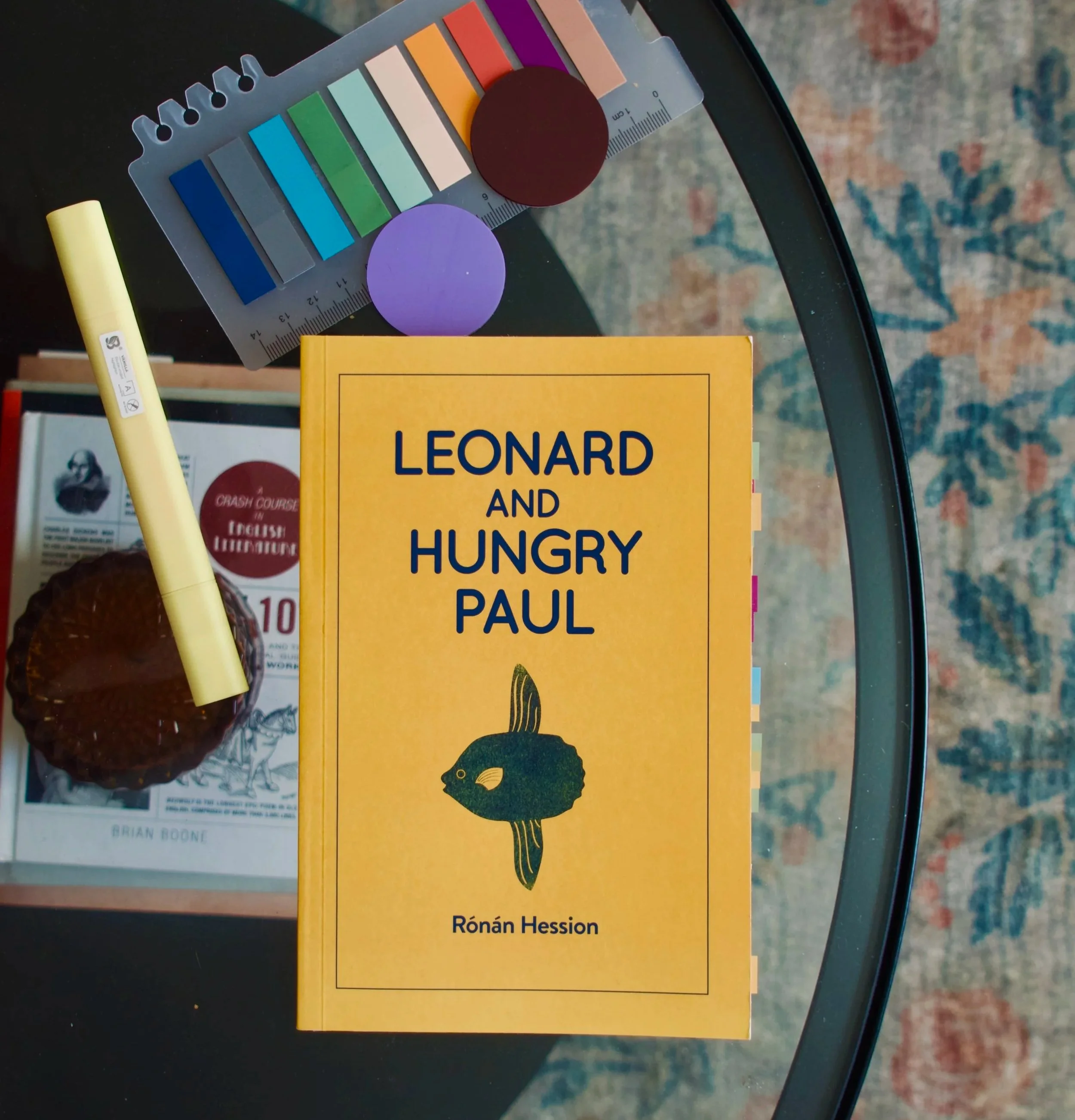
If Carlos Ruiz Zafón was right when he said, “Books are mirrors: you only see in them what you already have inside you,” then Rónán Hession’s Leonard and Hungry Paul has shown me that I am kinder, funnier, and wiser than I give myself credit for.
It’s rare to find a good novel about ordinary people living quiet lives in which almost nothing happens; no shocking revelations, no crises, no dark pasts demanding to be reckoned with. In a world forever urging us to want and strive for more, Hession’s debut is a charming, warm-hearted celebration of the everyday and of “overlooked people who simply live their lives as best they could.” It’s witty too, but refreshingly, never at anyone’s expense.
I knew I’d love it when I read the line, “…like his late father, he (Leonard) ‘just lacked a eureka face’’”, on page 1.
The two title characters are single men in their 30s. Leonard, who writes for children’s encyclopedias, longs to connect with someone who shares his awe at the beauty of the universe. Hungry Paul, by contrast, is entirely self-contained: considerate, devoted to his family, and perfectly content with “the innate orderliness of things.” He is mindfulness personified, living fully in and for the present moment. You might think him an unusual choice for a main character, and you’d be right. This is very much a two-hander, and is so well executed; without Leonard’s quiet yearning and low-key dynamism as a counterbalance, Hungry Paul’s story would have nowhere to go. (Why “Hungry”? We’re never told. For a man who lets the world wash over him, he seems remarkably low on appetite.)
This novel is sweet, gentle, and very funny — something we could all use more of right now. It made me happy, and it is a happy novel, but it doesn’t shy away from unhappiness. It deeply understands introverts, but it doesn’t let you forget that we are in the world and do ourselves a disservice if we shut it out, although we should always feel free to meet it on our own terms.
Most of all, it made me reflect. I had to pace myself with the highlighters and sticky tabs — there were so many noteworthy moments throughout the story.
There’s a much-needed, healing conversation between Hungry Paul and his sister, Grace, and as an eldest daughter, it spoke to my soul without preaching or flattering me; Chapter 23: Easter Sunday, you will always be famous.
Here’s Leonard musing on a flaw he discovers in the safe, introverted bubble he and Hungry Paul have thrived in — and how that bubble offered a false sense of peace while keeping them from connecting with other people:
“Solitude and peace lose their specialness when they no longer stand in contrast to anything. In a busy—or at least busier—life, quiet reflection provides resonance to experience. But to deprive life of experiences deliberately and to hide from its realities was not special. It was just another form of fear that led to a life-limiting loneliness that accumulated and accumulated until it became so big that it blocked up the front door, drowned out conversations and put other people behind soundproof glass.”
Here’s Barbara, an elderly patient, sharing her wisdom with Hungry Paul’s mother, Helen:
“What I learned is that everyone in your life has an invisible number on their foreheads, which represents the number of times you will see them again. It might be zero or one, or it could be a thousand, but it’s a number. We don’t have unlimited time with people. I don’t mean that in a morbid way. It’s a lesson for us to appreciate people while we can. Don’t put people off. Don’t think you can make up the time later.”
These ones just hit for any relationship:
“It may well be that if you truly want to open a heart, you need to break it open.”
“As you both change, you will periodically lose each other. You need to find each other again and—here’s the trick—instead of trying to rekindle what you had, you need to reinvent yourselves and your relationship. You have to keep starting new relationships with the same person.”
You see what I mean? Leonard and Hungry Paul is balm for the soul and smart as a whip too. It is the most joyful book I have read in this decidedly non-joyful year.
This was a book club pick, and finding books like this is why I love book clubs. I don’t think I would’ve found this one by myself, and I’m the better for it.
Also, BBC Northern Ireland has a charming, well-done TV miniseries adaptation of the novel.
I recommend both!
Happy reading! x 🤎