“The Morning Gift” by Eva Ibbotson is Excessively Charming
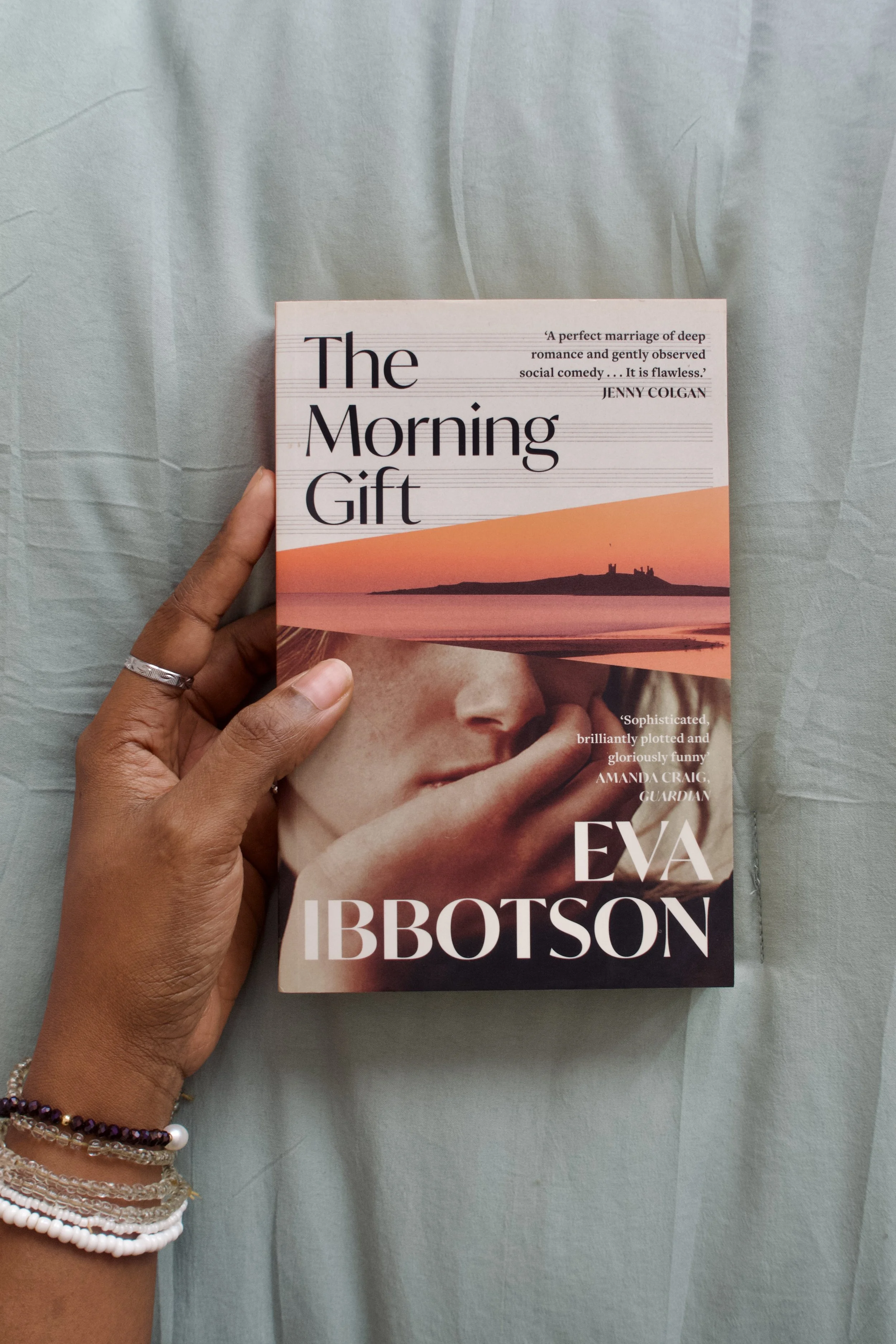
The Morning Gift is one of the reasons I still have not finished In Love With Love by Ella Risbridger. In Chapter Four, the author suggested pausing to read Eva Ibbotson’s novel for context, and it is exactly this kind of literary side quest that keeps turning one book into five. Let it be known that if I NEVER FINISH “In Love With Love”, I blame you Ella!
But, I regret nothing. The Morning Gift was lovely.
Set in the 1930s as Nazi forces move into Austria, the novel follows eighteen-year-old Ruth, who is accidentally left behind in Vienna after a passport mix-up prevents her from fleeing to England with her family. Quin, a young British professor, family friend, and former student of Ruth’s father, offers a solution: a marriage of convenience that will allow her to escape legally.
Once they arrive in London, they plan to keep the marriage secret — from her parents, his colleagues, her university friends, and Ruth’s kinda-sorta fiancé — until they can quietly divorce. This is a romance, so naturally, they begin falling in love instead. Then the former fiancé arrives, because apparently an already complicated secret marriage was not complicated enough.
The romance is predictable. The plot is occasionally ridiculous. I was completely charmed.
I want to emphatically say that Ibbotson is a brilliant writer, because I fear that everything that follows might otherwise sound like criticism. Her prose is flowing, dense, and gloriously committed to detail. It took me about fifty pages to find its rhythm, partly because the novel seems determined to introduce every refugee, expatriate, colleague, family member, and passing eccentric who enters Ruth’s new world.
There are so many characters, and she insists on making nearly all of them feel fully alive. The narrative moves from Ruth to Quin and then wanders into the perspectives of various secondary figures, taking detours that can be dizzying if you are expecting the cleaner structure of a contemporary romance. Some sentences contain so many subordinate clauses that they become whole neighborhoods.
And yet, somewhere around the hundred-page mark, the excess became…I don’t know, enjoyable?! The side characters stopped feeling like interruptions and began to create the sense of a complete social world: refugees and expatriates rebuilding lives in London, carrying histories, losses, habits, and private hopes with them.
That wider world gives the novel more weight than its romantic setup suggests. Ruth and Quin’s marriage begins as a practical response to political catastrophe, and the comedy of keeping it secret exists alongside the dislocation of people forced to leave home. Ibbotson allows tenderness, absurdity, and grief to occupy the same book without making any of them feel misplaced.
The novel was published in 1993, but its style feels older—closer to sprawling historical fiction than to the tightly-paced romances I usually read. It asks you to settle in, learn everyone’s name, and accept that the route back to the central couple may involve several scenic diversions.
Once I adjusted, I loved the writing. Ibbotson’s warmth toward her characters is irresistible, and Ruth’s world feels crowded in the best way: full of people making lives under difficult circumstances and finding room for humor, art, friendship, and love.
The Morning Gift is not a streamlined book, but it doesn’t want to be. It is lush, old-fashioned, occasionally exhausting, and deeply affectionate toward human beings. This is a very silly love story set against a very serious historical backdrop, and it’s worth all the side quests.
Let me know what you think in the comments. 🤎
Happy reading, x!