Olive Kitteridge by Elizabeth Strout
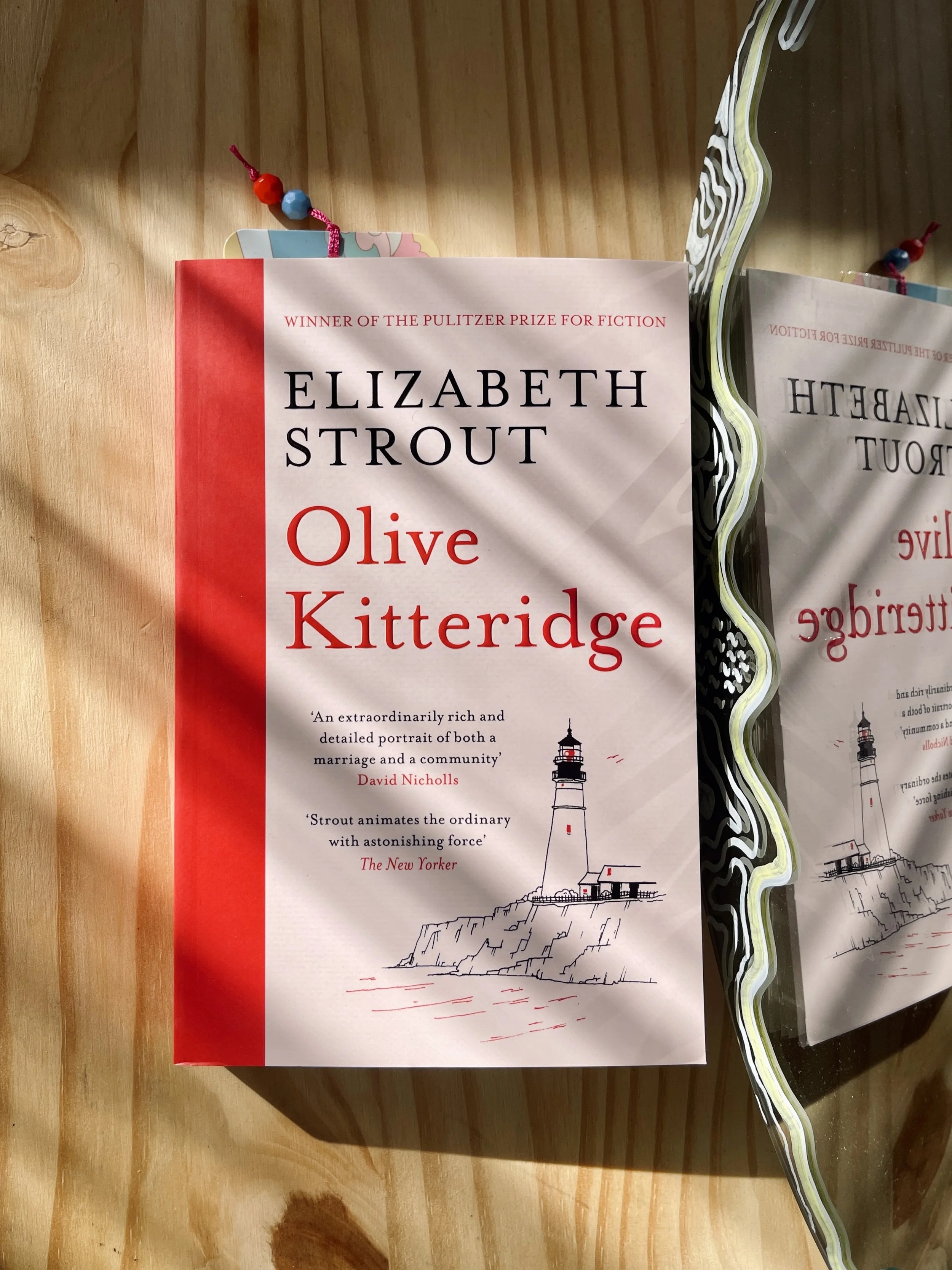
Elizabeth Strout’s Olive Kitteridge had been out for seventeen years before I finally read it, thanks to my book club. I had seen the HBO adaptation in my recommendations but did not know it was based on a book. I’m glad it eventually found its way to me because Olive Kitteridge is a wonderful read: observant, funny, and often very moving.
The novel is made up of thirteen interconnected stories set in Crosby, Maine. I love short-story collections, though sometimes the form does not contribute much beyond organizing the book. Here, it is essential. Strout moves across several years and between different characters, showing how one person’s major crisis can appear as a minor detail in someone else’s life. The stories reveal what has changed over time, what has gone unnoticed, and how differently people can be understood depending on who is looking at them.
At the center is Olive Kitteridge, a retired schoolteacher who is blunt, judgmental, and often more perceptive than the people around her would like. The book also follows her gentle husband, Henry; their estranged son, Christopher; and the other residents of Crosby whose lives cross hers. Through them, Strout writes about marriage, loneliness, aging, grief, and the ways people care for one another, sometimes without realizing it.
Olive is difficult, but Strout does not treat that as evidence that she lacks feeling. She also doesn’t soften Olive to make her more appealing. Olive can be cruel, self-righteous, and pleased by other people’s failures. She can also be deeply sensitive to someone else’s pain. What makes her convincing is that these qualities exist together. Her compassion does not erase her harshness, and her harshness does not make her incapable of compassion. She is allowed to be complicated and occasionally ignoble.
That complexity makes the novel more than a portrait of a small town. In each story, someone faces a crisis — some severe, others almost invisible to everyone except the person experiencing them. We rarely see these lives resolved. Even the stories focused on Olive feel like partial views rather than whole accounts. The effect makes us consider how little we know about other people, and perhaps about ourselves.
We cannot fully know what others think of us, what they remember, or what effect we have had on their lives. The structure of Olive Kitteridge gives us access to some of those different perspectives. We see Olive as she understands herself and as she is feared, resented, dismissed, loved, or remembered by others. None of these views tells the whole truth, but each one adds something. This is one of the book’s strongest ideas: a person cannot be contained by a single account of who they are.
I am grateful for writers like Strout, who take the experiences of ordinary people seriously, especially as they age. She writes without sentimentality but with compassion. Her characters are selfish, generous, frightened, lonely, and often less noble than they believe themselves to be. They are also important to the people around them. Strout reminds us that being unlikeable is not the same as being unworthy.
“Had they known at these moments to be quietly joyful? Most likely not. People mostly did not know enough when they were living life that they were living it.”
That quote is one of my favorites and it captures much of the novel’s sadness. People often understand what mattered only after the moment has passed. Near the end, Olive reflects on how much has been “unconsciously squandered.” The world continues to confuse her, but she does not want to leave it yet. The conclusion is moving because it does not offer a grand lesson or a sudden transformation. Olive does not finally understand life; she simply recognizes that she still wants to be part of it.
There is much more to admire in the book: Strout’s precise descriptions, her quiet humor, and the care she gives even to characters who appear only briefly. But its main subject is the importance of individual lives. A person can seem ordinary from the outside while experiencing a world of private conflict, loss, and hope. The characters stay with us because Strout does not fully explain or resolve them. They remain inconsistent and incomplete, like real people.
I look forward to reading more of her work.
Happy reading!
🤎