Farrah Rochon’s playful Hercules prequel gives Disney’s divine chorus individual voices, complicated sisterhood, and a coming-of-age story of their own
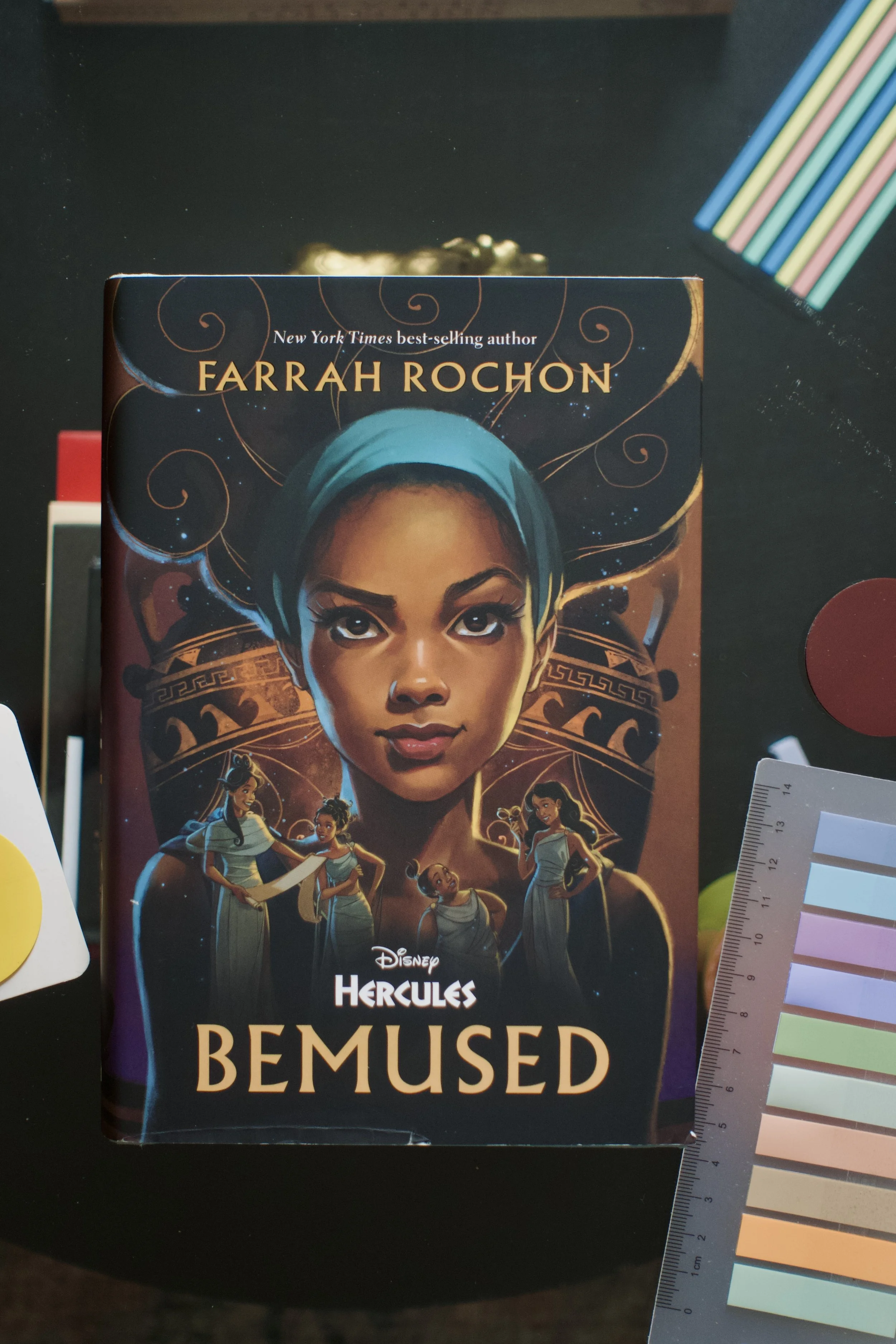
There’s something deeply nostalgic about returning to the world of Disney’s 1997 Hercules, especially when the Muses are involved. They were always among my favorite parts of the movie, so the moment I heard about Farrah Rochon’s Bemused, I was intrigued. Rochon’s books are usually such a fun time that I suspected I’d enjoy this one.
Bemused is a prequel and spin-off to the animated film. It follows Calliope, Clio, Melpomene, Terpsichore, and Thalia—the daughters of Mnemosyne, the goddess of memory. After the war with the Titans, Zeus grants Mnemosyne asylum on Mount Olympus. She eventually flees, wipes the gods’ memories, and builds a quiet life with her daughters far from Olympus.
When we first meet the sisters, they’re not yet the glamorous, confident, all-knowing Muses we recognize from the movie. They’re girls living with their mother in a small fishing village, trying to stay hidden and obeying rules designed to keep their past from catching up with them.
Naturally, those rules don’t survive for long.
After the sisters perform together in public, their safe, ordinary life begins to unravel. Their mother is kidnapped, and they’re forced to leave home on a rescue mission. Along the way, each girl begins discovering the gifts and powers that will eventually make her a Muse.
That transformation was one of my favorite parts of the book. The pleasure isn’t simply recognizing familiar characters; it’s watching them grow into the figures we already know. Rochon turns their origin story into a coming-of-age narrative about learning that the qualities you’ve been taught to hide may be the very qualities that define your power.
The novel focuses on five Muses rather than the traditional nine of Greek mythology, but it honors the spirit of who they are and the artistic domains they represent. It also gives the sisters something the film couldn’t: room to exist as individuals.
In Hercules, the Muses function primarily as a collective. They’re iconic, hilarious, and essential to the movie’s energy, but we barely learn their names. Bemused gives each sister a distinct personality, set of fears, strengths, and relationship to the family. Their differences create tension, but they also make the group’s eventual harmony more meaningful. They don’t become powerful by turning into identical parts of a chorus; they become powerful by learning what each voice contributes to it.
Thalia was probably my favorite here—which tracks, because she has always been my favorite Muse.
Beneath the mythology and adventure, Bemused is a warm story about identity, self-actualization, and sisterhood. The sisters are learning who they are beyond the small, protected life their mother created for them. At the same time, the book treats Mnemosyne’s protectiveness with real sympathy. She’s trying to keep her daughters safe, even if that safety has required them to remain disconnected from their history and abilities.
That tension gives the adventure emotional weight. Growing up means understanding why your parents made certain choices without assuming those choices must determine the rest of your life. For the sisters, discovering their power also means deciding what to do with an inheritance they were never meant to remember.
Overall, this was such a fun and entertaining read. It expands characters I already loved without losing the humor, theatricality, and affection that made them memorable in the first place. If you grew up loving Disney’s Hercules, enjoy Greek-mythology retellings, or have a soft spot for stories about sisters discovering who they are and what they can do together, Bemused is delightful.
Let me know what you think in the comments. 🤎
Happy reading, x!