If I Ruled the World
Amy DuBois Barnett’s glamorous, messy novel asks what success costs when a young woman insists on defining it for herself
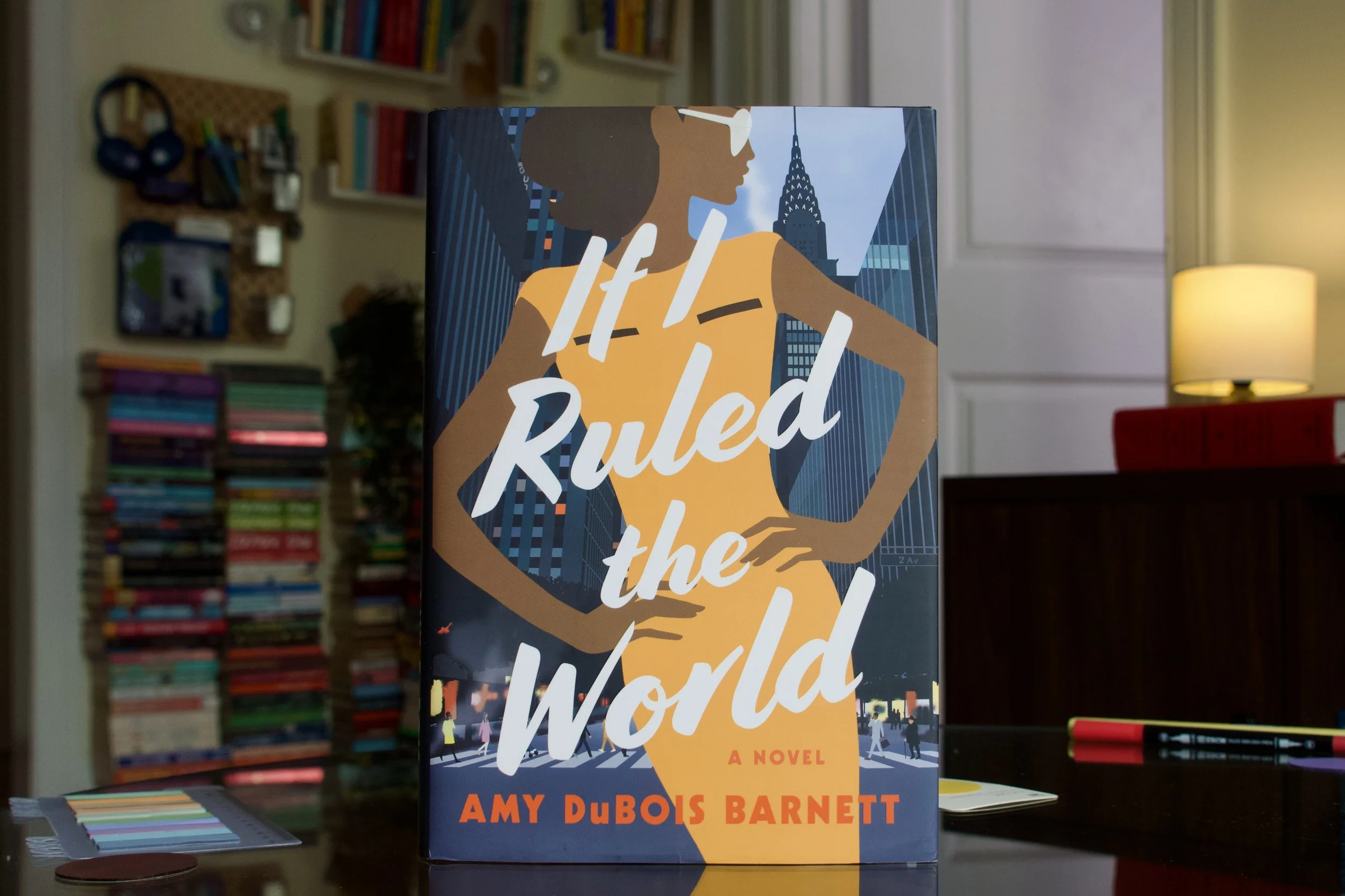
It’s the late 1990s, and at the center of the story is Nikki Rose—an ambitious Black woman navigating the high-stakes entertainment industry as she builds a career, fights for creative control, and tries to define success, love, and self-trust on her own terms.
After being told one too many times that "Black girls don’t sell magazines," Nikki quits her prestigious fashion job to take over Sugar, a struggling hip-hop lifestyle magazine. Thrown into a world of wealth, decadence, and debauchery, she’s given just six months to save the publication—and her own career dreams. As she pulls all-nighters and parties with New York City’s elite, her biggest threat is her powerful, married ex-boss and former lover, who is determined to destroy her.
If I Ruled the World is gritty, fast-paced, glamorous, messy, and very human.
Nikki isn’t just trying to succeed; she’s learning to decide what success even means, as bosses, colleagues, friends, and romantic partners offer competing definitions. The novel understands that ambition is never merely professional: what we pursue shapes our relationships, our sense of self, and the compromises we learn to describe as necessary.
Barnett captures something painfully specific about being a Black woman—especially an ambitious one in entertainment (in any field, honestly): every victory is treated as a one-time occurrence.
It’s infuriating to prove yourself repeatedly, be central to a project’s success, and still have your next idea received as if you’ve only just entered the room. All goodwill, all assumptions of competence, expire between meetings; between projects. The very people who benefited from your work may ask you to reintroduce it—and yourself—again and again. Or worse, they’re surprised all over again by your capability.
The exhaustion doesn’t come only from doing the job. It comes from constantly having to establish that you’re someone who can do it. If I Ruled the World places Nikki inside professional spaces where talent is praised without reliably being trusted. She’s allowed to be impressive, but not necessarily powerful. Her ideas can create value while the authority to act on them remains elsewhere.
The book is also sharp about the casual misogyny of the entertainment industry. Sexism isn’t always announced through dramatic confrontations; it shows up in the smaller, everyday ways women are doubted, minimized, overlooked, interrupted, or asked to make themselves more digestible.
A woman can be ambitious, but not threatening. Confident, but still pleasing. Brilliant, but grateful enough not to ask who receives the credit. And for Black women, those contradictions tighten further. Nikki is expected to demonstrate exceptional ability while reassuring everyone that her ability won’t disrupt the existing order.
For her, fighting for creative control matters not as professional achievement, but as a claim to stop asking permission from people who benefit from her vision.
From the outside, success seems easy to identify: the right job, the right access, the right relationships, the right proximity to power. We follow Nikki as she learns to recognize the markers of a “good” life as defined by the culture—and what struck me was the tension between building a life that looks good and one that actually feels right.
Because a life can be impressive and still feel wrong from the inside.
That gap seems to sit at the heart of Nikki’s journey. She has to separate what she genuinely wants from what she has been taught to want—and from what other people want through her. Career ambition, romance, friendship, and creative fulfillment become tangled because each offers a different version of who she might be.
Barnett does not suggest that ambition itself is the problem. Nikki’s desire for more is not treated as vanity or moral failure. The question is whether she can pursue more without letting other people define the destination. That is harder than it seems. When you have worked for years to enter rooms that once excluded you, leaving—or even questioning—the room can feel like ingratitude. You may keep chasing a version of success long after it stops feeling like yours because too much sacrifice has gone into reaching it.
The novel asks what happens when achievement and alignment begin moving in opposite directions.
What stayed with me most, however, were the relationships.
If I Ruled the World understands that love can take many forms—romantic, platonic, professional, and self-directed—and that genuine care doesn’t guarantee someone knows how to love you well. A person can want the best for you and still define “best” through their own fears and limitations. A partner can admire your ambition while preferring the version of you that doesn’t inconvenience him. A mentor can believe in your talent while trying to control how you use it.
Someone can love you and still love you the wrong way.
I appreciated the book’s willingness to sit inside that nuance. Its relationships aren’t divided neatly between people who support Nikki and people who don’t. Care and control can coexist—they often do—and protection can feel like limitation.
You understand why Nikki’s choices are hard, because walking away from a harmful dynamic is simpler when nobody involved loves you. It’s much harder when the person hurting you is also someone who has shown up, sacrificed, or believed in you. So the story asks something more nuanced than whether Nikki is loved; it asks whether the love available to her leaves room for her to remain fully herself.
Barnett provides some really good examples of friendships in this book, especially between the women.
We’re quick now to describe tension between friends as jealousy. The internet—and the quarterly discourse about envious friends, monitoring spirits, and haters—is not helping. A friend questions your choices? She can’t handle your growth. She says you’ve changed? She’s threatened by your success.
It’s true that some people—some friends—genuinely prefer you smaller, more predictable, and easier to access. But sometimes the people who love you are the first to notice shifts you can’t see yet. And if your life changes, or your success becomes more visible, don’t your friends owe you honesty when they feel something changing between you—even when the conversation is uncomfortable?
The answer to that is definitely contextual, of course, and it depends on trust. I think the novel does a great job of portraying what that can look like.
Do you trust the people in your life enough to reflect something back to you honestly? Do they have a history of supporting your growth, or do they become critical only when that growth limits their access to you? Are they naming a real change in your values and behavior, or simply reacting to a version of you they can no longer control?
And do you trust yourself enough to hear the concern without surrendering your judgment—without getting defensive? A friend’s perspective can be valuable without becoming a verdict. You can consider what someone sees, decide what’s true, and still make your own choice. I know from experience that it’s easier to be open to a friends “critique” when you’re certain of your own sovereignty, which most people are not admittedly.
At the end of the day, you are sovereign. You can and should direct your own life. But it is not a small thing to have people around you who love you enough to tell the truth instead of simply offering applause. It’s a blessing. Real friendship cannot require you to remain unchanged. It also cannot survive if every concern is dismissed as envy.
I think more than anything, this book feels like a reminder that even the most well-meaning people can’t tell you which path is right for your life. Advice can offer context. Love can offer protection. Experience can warn you about consequences. But none of those things transfers responsibility for your life to someone else.
At some point, self-trust requires risk. You’re going to have to take leaps of faith and make choices without any guarantee that things will work out. You choose anyway—not because you’re certain, but because you’re the one who has to live with the result, good or bad. That is the accountability of sovereignty.
Decisions sound glamorous when framed as freedom, but freedom also means giving up the comfort of blaming someone else. Nikki wants a life that feels like her own, so she accepts responsibility for the choices that create it.
Barnett allows that process to be messy. Nikki doesn’t arrive at self-trust through one triumphant decision. She makes mistakes, disappoints people, misjudges situations, and keeps trying to distinguish her own voice from the many voices telling her who to be.
That messiness is what makes the novel feel so human.
If I Ruled the World is entertaining in all the ways a story about ambition and the entertainment industry should be. It has glamour, pressure, romance, professional stakes, and the addictive energy of watching someone draw closer to the life they’ve imagined.
But beneath that surface is a thoughtful story about competence, friendship, love, and self-definition. Nikki’s journey is not about rejecting ambition. It is about claiming enough ownership of her life to decide which ambitions deserve her.
The book begins at a measured pace and ends with real emotional force, and it’s satisfying. By the second half, I was completely invested—not only in what Nikki would achieve, but in whether the life she built would finally feel like one she had chosen.
Such a good read.
Let me know what you think in the comments. 🤎
Happy reading, x!